Showing posts with label St John Ambulance. Show all posts

Friday, 24 June 2016

We're Back - It's Time to Talk About Allergies

Woo! It's time to celebrate!

Exams are over, and I'm now back in business!

For now, here's a First Aid Friday post!

St John Ambulance's "How to Treat Allergic Reactions" Video!


 Here's the transcript for the video, if you can't watch it:

An allergy is the body’s unexpected reaction
to something it comes into contact with, called an allergen.
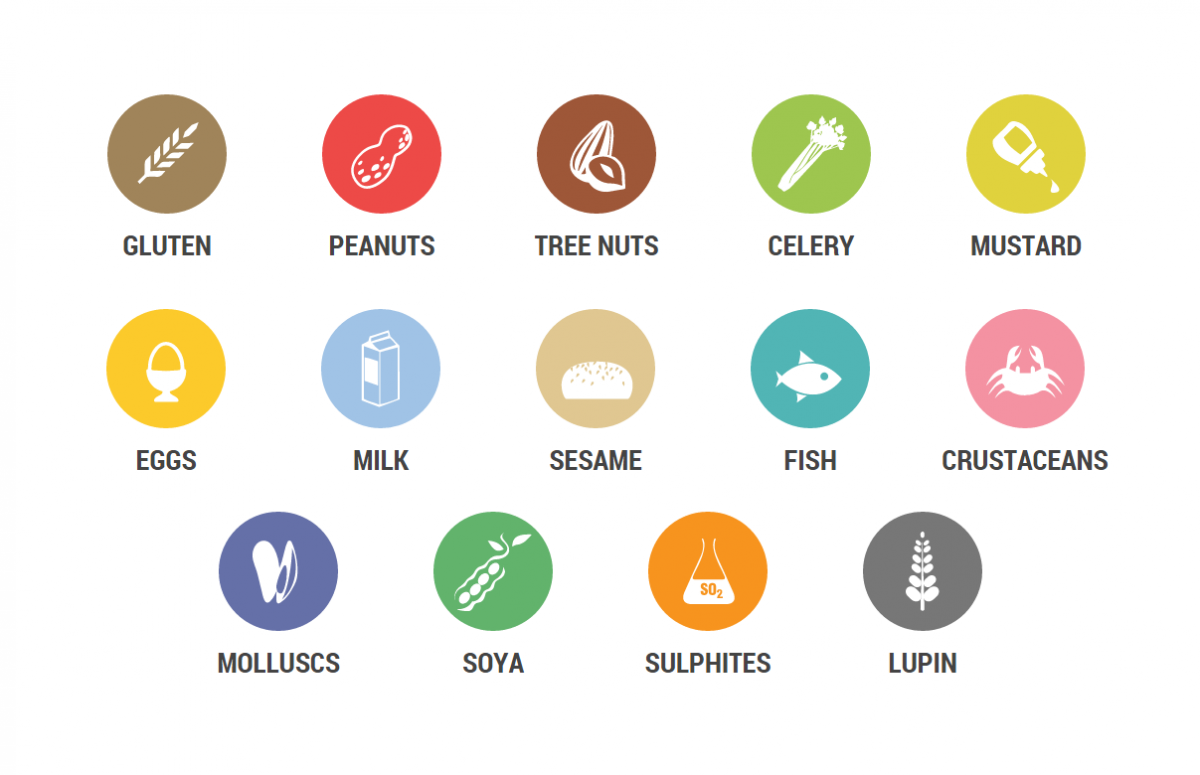
Source: www.nutritics.com/

Allergens include plant pollen, insect stings, animal hair, fruit, nuts, shellfish and drugs.
A severe allergic reaction can develop within just a few seconds and can be fatal if not
treated quickly. The person may carry medication in the form of an auto-injector, a pre-filled pen filled with adrenalin or epinephrine and this can help reduce the body’s allergic reaction.

Source: www.team-consulting.com


If you think somebody maybe having a severe allergic reaction, there are six key things to look for - puffy eyes, difficulty in breathing, blotchy skin, swelling of the tongue and throat, anxiety and signs of shock.

Source: www.nhs.co.uk

When you call for an ambulance, make sure you tell them that you think the person is suffering a severe allergic reaction and what could have triggered it.
Help the casualty down into a comfortable position, sitting forward slightly will help with their breathing. Help them to find their auto-injector and get them to use it.
You may have to do that for them.
Read the instructions on the pen and follow them. 
For this one, take off the cap, hold it about 10 centimetres away from the outer thigh, and gently stab it into the thigh.
Hold it there for 10 seconds.
After 10 seconds gently remove the pen and massage the area for 10 seconds.
If the casualty becomes unconscious, perform a primary survey and treat for an unconscious casualty.

Source: www.sja.org.uk

Remember, for a severe allergic reaction, call for an ambulance, help them to take their
medication if they have any, and if they become unconscious, check their breathing.
That’s how we treat a severe allergic reaction.

Looking forward to some good posts!
 - Geeker

Saturday, 30 January 2016

Last Week's Information!

As promised, here's our information from last week's answers!

 Urinary Incontinence

Urinary incontinence affects a lot of people. If we take a look at some statistics by www.bladder-control.co.uk, we can see that an overactive bladder is more predominant in older generations:


 Here are some of the top facts provided by their website, sourced from other places:

1. Studies suggest that in the UK "major faecal incontinence" affects 1.4% of the general population over 40 years old and constipation affects between 3% and 15% of the population.5

2. In the UK, 24% of older people are affected by urinary incontinence. Of those older people in institutional care, 30-60% are affected by urinary incontinence, and 25% by bowel incontinence.7

3. Women are more likely to suffer from stress urinary incontinence than men. That's because of the effects of childbirth and the menopause. Men, on the other hand, are more likely to have urinary retention. That's because many men develop prostate gland enlargement as they age. Women don't have a prostate gland.

Sources:
5. Perry, S. et al. Prevalence of faecal incontinence in adults aged 40 years or more living in the community. Gut 2002; 50: 480-484. http://gut.bmj.com/cgi/content/full/50/4/480. (Abstract available. Article accessed 17.01.2006)
7. Hunskaar, S., Lose, et al. (2003) Prevalence of Stress Urinary Incontinence in Women in Four European Countries, 2002. ICS: UK. Link to PDF: http://www.icsoffice.org/publications/2002/pdf/257.pdf (Accessed 28.11.2006)

But what is urinary incontinence?

According to the NHS:

Urinary incontinence is the unintentional passing of urine. It is a common problem and is thought to affect millions of people worldwide.

If you're struggling with incontinence, there's a very helpful website here, that will provide with crucial information that you need to know: http://www.nhs.uk/Livewell/incontinence/Pages/Gettinghelp.aspx

 Myocardial Infarction

For a simple definition, the medical term "myocardial infarctions" means heart attack.

And again stated by our helpful website, the NHS (it's very useful, you know):

A heart attack is a serious medical emergency in which the supply of blood to the heart is suddenly blocked, usually by a blood clot. Lack of blood to the heart can seriously damage the heart muscle.

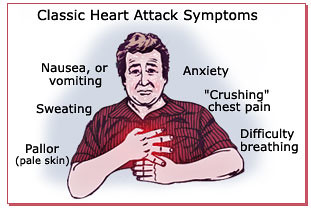
Here's some symptoms that might be present:

Source: http://www.ba-bamail.com/content.aspx?emailid=18627


And some more...
Source: Heart attack wisdom on Pinterest

So, how to "treat" it?

Here's a great, informative video!


I hope that covers a lot!

Any more questions, just ask!
 
- Geeker


Friday, 30 January 2015

First-Aid Friday: Passing Exams!

Good news! Yesterday, I passed my St John Ambulance first-aid exams!

Luckily I didn't faint, but I can't say the same for this week's casualty!


- Geeker