As promised, here's our information from last week's answers!
Urinary Incontinence
Urinary incontinence affects a lot of people. If we take a look at some statistics by www.bladder-control.co.uk, we can see that an overactive bladder is more predominant in older generations:
Here are some of the top facts provided by their website, sourced from other places:
1. Studies suggest that in the UK "major faecal incontinence" affects 1.4%
of the general population over 40 years old and constipation affects
between 3% and 15% of the population.5
2. In the UK, 24% of older people are affected by urinary incontinence. Of
those older people in institutional care, 30-60% are affected by urinary
incontinence, and 25% by bowel incontinence.7
3. Women are more likely to suffer from stress urinary incontinence than
men. That's because of the effects of childbirth and the menopause. Men,
on the other hand, are more likely to have urinary retention. That's
because many men develop prostate gland enlargement as they age. Women
don't have a prostate gland.
Sources: 5. Perry, S. et al. Prevalence of faecal incontinence in adults aged 40
years or more living in the community. Gut 2002; 50: 480-484. http://gut.bmj.com/cgi/content/full/50/4/480. (Abstract available. Article accessed 17.01.2006) 7. Hunskaar,
S., Lose, et al. (2003) Prevalence of Stress Urinary Incontinence in
Women in Four European Countries, 2002. ICS: UK. Link to PDF:
http://www.icsoffice.org/publications/2002/pdf/257.pdf (Accessed
28.11.2006)
But what is urinary incontinence?
According to the NHS:
Urinary incontinence is the unintentional passing of urine. It
is a common problem and is thought to affect millions of people
worldwide.
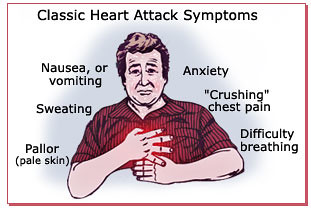
For a simple definition, the medical term "myocardial infarctions" means heart attack.
And again stated by our helpful website, the NHS (it's very useful, you know):
A heart attack is a serious medical emergency in which the
supply of blood to the heart is suddenly blocked, usually by a blood
clot. Lack of blood to the heart can seriously damage the heart muscle.
The cochlea (plural is cochleae) is a spiraled, hollow, conical chamber of bone, in which waves propagate from the base (near the middle ear and the oval window) to the apex (the top or center of the spiral). Rosenthal's canal or the spiral
canal of the cochlea is a section of the bony labyrinth of the inner ear
that is approximately 30 mm long and makes 2¾ turns about the modiolus.
The septicaemic plague is caused by the Yersinia pestis bacteria, and is one of three types of the plague. Although septicaemic plague is rarely contracted person to person, it is a complication of the untreated bubonic plague - yet buboes do not develop. You may experience: chills, fever, weakness, abdomen pain, bleeding - which would form underneath the skin or organs, and thus, shock.
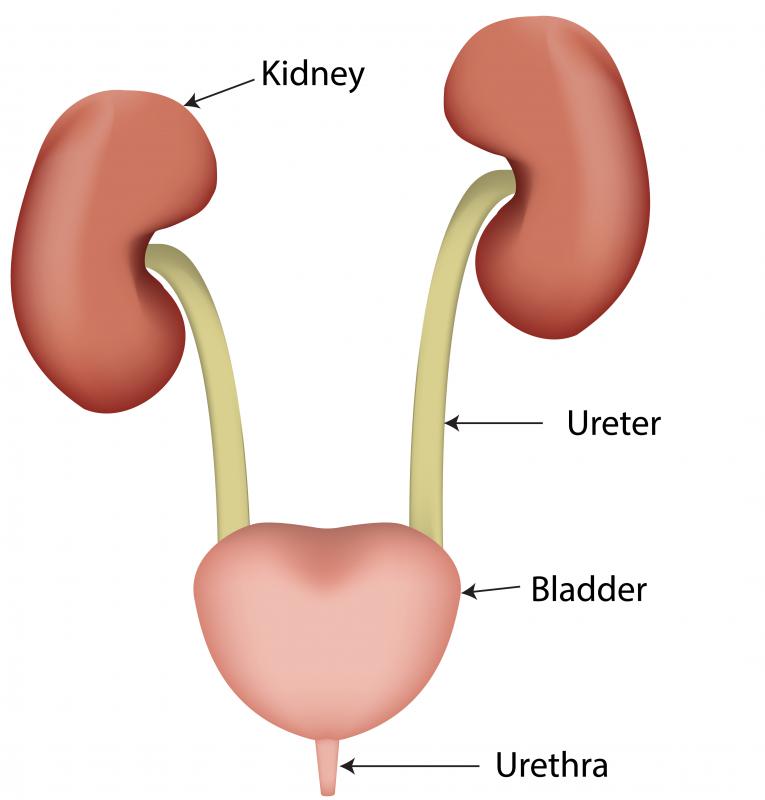
Mash-Up Monday: Urethra!
This long tube connects the bladder to the urinary meatus, which removes from the body.
Wednesday Words: Cecum!
According to Wikipedia:
In herbivores, the cecum stores food material where bacteria are able to break down the cellulose. This function no longer occurs in the human cecum (see vermiform appendix), so in humans it is simply a dead-end pouch forming a part of the large intestine.
It's here; it's time for us to reveal last week's answers!
Secret Sunday: Hypertrophic Scars!
Hypertrophic scars are a build up of excessive amounts of collagen, this raises the skin. However, these are not to be confused with keloid scars, as these are more significantly raised. Ever had one?
Mash-Up Monday: Patulous Eustachian Tube
Your auditory tube called the "Eustachian tube" links the middle ear to the nasopharynx. When this remains constantly open, this is called Patulous Eustachian Tube. This can cause symptoms like muffled hearing and autophony
Wednesday Words: It's an Otoscope!
You've had it's definition and an image, so here's what it can do!
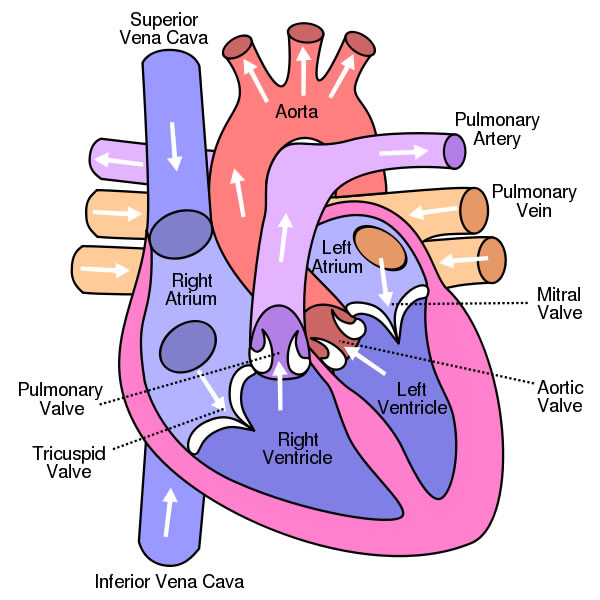
Secret Sunday: They were all pictures of Meningitis! Mash-Up Monday: Atrioventricular Node (If you're clever), and ventricles! Wednesday Words: Oxytocin
Last Week's Answers: 4! Secret Sunday: "A Coronary Calcium Scan showing calcified plaque in one of the major
coronary arteries (arrow). The white part of the image near the arrow is
plaque. The white around the outside of the image forming a rough
circle is bone. Below right: A normal Coronary Calcium Scan with
no white-appearing plaque. The heart is the light gray mass in the
middle of the image. The spine is the white object at the bottom left of
the image." - http://www.cedars-sinai.edu
Mash-Up Monday: Escherichia coli
Don't forget, there's going to be another Secret Sunday today!