Showing posts with label Video. Show all posts

Saturday, 30 January 2016

Last Week's Information!

As promised, here's our information from last week's answers!

 Urinary Incontinence

Urinary incontinence affects a lot of people. If we take a look at some statistics by www.bladder-control.co.uk, we can see that an overactive bladder is more predominant in older generations:


 Here are some of the top facts provided by their website, sourced from other places:

1. Studies suggest that in the UK "major faecal incontinence" affects 1.4% of the general population over 40 years old and constipation affects between 3% and 15% of the population.5

2. In the UK, 24% of older people are affected by urinary incontinence. Of those older people in institutional care, 30-60% are affected by urinary incontinence, and 25% by bowel incontinence.7

3. Women are more likely to suffer from stress urinary incontinence than men. That's because of the effects of childbirth and the menopause. Men, on the other hand, are more likely to have urinary retention. That's because many men develop prostate gland enlargement as they age. Women don't have a prostate gland.

Sources:
5. Perry, S. et al. Prevalence of faecal incontinence in adults aged 40 years or more living in the community. Gut 2002; 50: 480-484. http://gut.bmj.com/cgi/content/full/50/4/480. (Abstract available. Article accessed 17.01.2006)
7. Hunskaar, S., Lose, et al. (2003) Prevalence of Stress Urinary Incontinence in Women in Four European Countries, 2002. ICS: UK. Link to PDF: http://www.icsoffice.org/publications/2002/pdf/257.pdf (Accessed 28.11.2006)

But what is urinary incontinence?

According to the NHS:

Urinary incontinence is the unintentional passing of urine. It is a common problem and is thought to affect millions of people worldwide.

If you're struggling with incontinence, there's a very helpful website here, that will provide with crucial information that you need to know: http://www.nhs.uk/Livewell/incontinence/Pages/Gettinghelp.aspx

 Myocardial Infarction

For a simple definition, the medical term "myocardial infarctions" means heart attack.

And again stated by our helpful website, the NHS (it's very useful, you know):

A heart attack is a serious medical emergency in which the supply of blood to the heart is suddenly blocked, usually by a blood clot. Lack of blood to the heart can seriously damage the heart muscle.

Here's some symptoms that might be present:
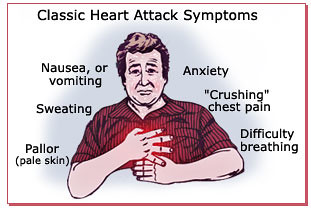
Source: http://www.ba-bamail.com/content.aspx?emailid=18627


And some more...
Source: Heart attack wisdom on Pinterest

So, how to "treat" it?

Here's a great, informative video!


I hope that covers a lot!

Any more questions, just ask!
 
- Geeker


Sunday, 18 October 2015

BrightMed: Session 1!

 Time has gone quickly, as yesterday was another session back at BrightMed! And, I have to say, they never fail to interest!

This is definitely going to be a long post, so grab your tea or coffee, and get reading!

We began the session by scrutinising the differences between primary care and secondary care. We found various job roles for each, let's take a look at some here:

Primary care:
  • General practitioner (GP)
  • Family doctor
  • Nurse practitioner
  • Pharmacist
  • Optician
  • Dentist

Secondary care:
  •  Hospital
    • Dermatologists
    • Urologists
    • Cardiologists
  • Specialised clinics
  • Speech therapists
  • Occupational therapists 

Next, we looked at a multidisciplinary team. One example was poor Mrs Beaton, who was diagnosed with breast cancer. Here are some people who could be at a multidisciplinary team to discuss her treatment:

  • Cancer nurse
  • Occupational therapist
  • Radiologist
  • Social worker
  • GP
  • Pathologist
  • Oncologist
  • Health care assistant
  • Surgeon
  • Physiotherapist
  • Clinical biochemist
  • Pharmacist 

 After this, we discussed how to take a person's history. Do you know the steps?

Here is what they suggested:

Introduction
  • Introduce yourself
  • Explain why you are there
  • Ask for consent
Patient demographics
  • General information about the patient (Name, age, etc.)
Presenting complaint
  • Briefly, why has the patient arrived today? 
History of presenting complaint

  • Details about the presenting complaint
Past medical history
  • Past experience of health problems
 Drug history
  • List of medicatinos they take
  • Allergies?
Family history
  • Medical conditions/causes of death within the family
Social history
  • Home life and hobbies
  • Alcohol consumption and tobacco use
 And then, you're done taking the history!

So, apart from that, what can you check for on examination?

First you need to use the acronym "WIPER" - Wash, Introduce, Permission, Expose, Reposition

Next, you're ready to get hands on (which the patients consent, of course)!

Hands
-Any signs of clubbing?
-Xanthomas (these can signify high cholesterol/lipids)
-Nicotine stains

Arms
-Xanthomatus eruptions
-Pulse (radial) - you can also check for a delay between both wrists, too
-Blood pressure

Neck
-Pulse (carotid)

Face
-Pale conjunctivae
-Corneal arcus (common in the elderly, but in young people it can signify high cholesterol/lipids)
-Xanthalasma
-Nicotine stained teeth
-Cyanosis

Chest
-Pectus exavatum
-Pectus carinatum
-Scars
-Pacemaker
-Auscultation sites (aorta - base right, pulmonic - base left, mitral - apex, and tricuspid - left lateral stermal border)

Legs
-Peripheral oedema (fluid)

Ankle
-Pulse (posterior tibial artery)

Wow! That's a lot of examination!

Next, was Station 3 - Heart Sounds!

First, let's look at the parts of the heart that are involved:

Systolic Vs Diastolic. [Source: http://healthy-ojas.com]
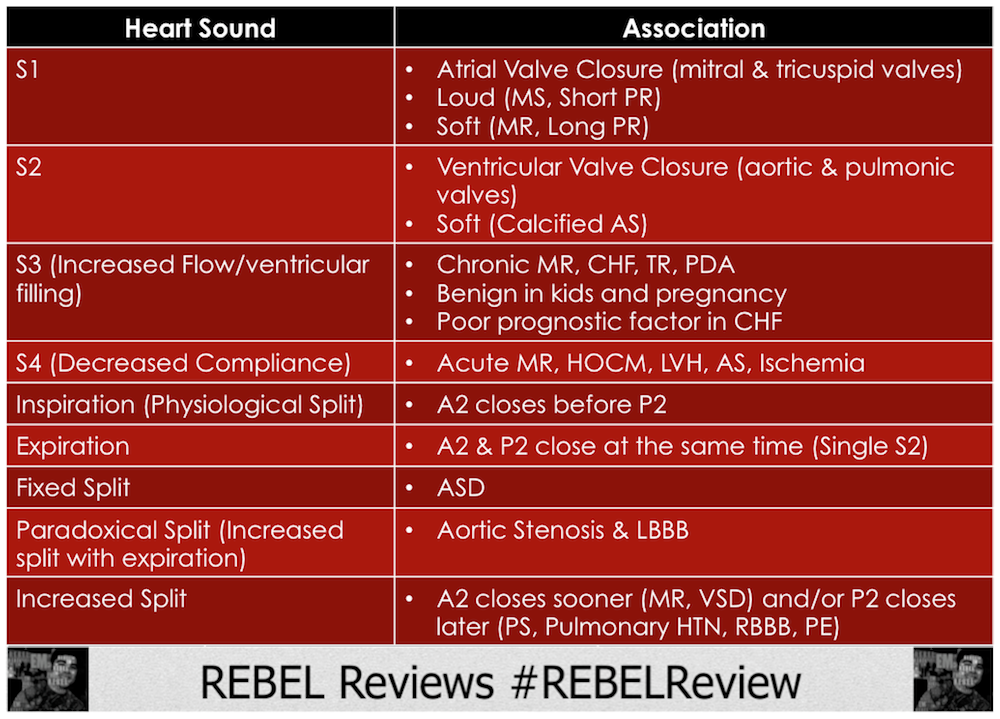
Next, we can take a look at the normal Vs abnormal sounds for a heart:

[Source: Wikipedia]

Curious to what these abnormal sounds can signify?


In simple terms:

Stenosis is a narrowing
Regurgitation is leaking

Here's part one of a very interesting video:


Finally, we looked at ECGs - Electrocardiogram

Which is the "recording of electroactivity of the heart using electrodes placed over the heart, wrists and ankles"

What can effect it?

  • Heart rate monitoring
  • Arrhythmias
  • Disorders in the activation sequence
  • Increased thickness
  • Myocardial ischemia and infarction
  • Drugs 
We monitor them through a series of waves:

Then, we look at the heart's electrical system:

Finally, here's a great video of ECG cardiac arrhythmias


What a day!

Don't forget to follow @BrightMed on Twitter!

 
- Geeker

Thursday, 13 August 2015

Sunday, 9 August 2015

Sporty Weekend!

It's the weekend... so let's get sporty!

How do we train our bodies for Formula One?
 Last year, Jenson Button revealed his secrets!

http://www.telegraph.co.uk/men/active/10693007/F1-fitness-how-to-get-in-shape-like-Jenson-Button.html

Fancy some video games?

Try out this new channel!


Our bodies are incredible!


- Geeker

Saturday, 1 August 2015

AsapSCIENCE - Can You Trust Your Ears?

 It's never too early for AsapSCIENCE!

Here's an interesting video where they explore many auditory illusions - including McGurk, and Shepard Tones!


- Geeker

Wednesday, 1 April 2015

We're Back!

 It's been a long month and thankfully we're now back and ready to post!

To compensate, here's a recent summary on a video I watched, by the TED Talks.


“This gel can make you stop bleeding instantly”


The concept of bleeding is one of the most significant aspects of care, treatment and even diagnostics in medicine.  For hundreds of years physicians have battled with preventing bleeds and treating severe cases of trauma. For this reason, the idea of an instant bleed-relief gel is absolutely incredible. Joe Landolina (an American inventor and biomedical engineer) introduces TED’s audience to the concept of this fascinating notion by plunging them into the field of war.

He requests for us to imagine being an injured soldier with a severe femoral bleed – and immediately addresses that this fatal wound can kill within three minutes. To make matters worse, the medic’s utensils and treatment methods can take up to five minutes to begin affect, leaving the possibility of death almost inevitable. With this idea accounted, Joe describes the Extracellular Matrix (ECM) and its role in the body; being responsible for healing. He accounts that other products on the market are only two-dimensional functioning on the ECM and does not ‘fit’ into its structure. Yet, his new product, Vetigel made from “small pieces of plant derived polymers” re-assembles itself into the wound and its local tissue – working with the body to clot in less than ten seconds.

Joe proposes that it should be out for release for human use within the “next year” (2015). To conclude, he refers back to the first initial image of the soldier and describes the simplicity of treatment that Vetigel could propose.

The concept is absolutely captivating and completely intrigues all members of the general public, with an interest of medicine or not.


Interested? Here's the video


- Geeker

Friday, 13 February 2015

First-Aid Friday: Unlucky!

It's Friday 13th, you don't believe in this 'superstitious stuff', so you go for a walk in the woods. Then suddenly, your leg is broken - unlucky, I know!

So, how do emergency first-aiders treat broken legs?


- Geeker

Friday, 16 January 2015

Wednesday, 29 October 2014

Wednesday Words: What's your vaccine REALLY for?

  So, it's Wednesday Words today - and it's a particularly interesting topic...

Diphtheria. What is it? How do we prevent it? And what does it do?

Some of us will know that diphtheria, the upper respiratory tract illness is one of five vaccines administered to infantile children.

Some symptoms of diphtheria:
  • Sore throat
  • Low fever
  • Adherent membrane on the tonsils, pharynx, and/or nasal cavity
  • Sometimes, skin can be affected
  • Cough
  • Headache
  • Difficulty swallowing
  • Rapid breathing
Often, the disease is manageable. However, when lymph nodes are affected it becomes more problematic. Some may require a tracheotomy or incubation.

If you would wish to learn more about diphtheria, the NHS, kidshealth, and the CDC offer some particularly interesting information.

For those of you waiting for a factual video, here's a short video I found:


For those of you whom can't view the video, here's the link:
https://www.youtube.com/watch?v=poK8YMA2RtQ

- Geeker

Friday, 24 October 2014

Sunday, 12 October 2014

Atherosclerosis

 I have been told that some of you cannot see the Atherosclerosis video.

So, here's the direct link:

https://www.youtube.com/watch?v=XZB2GciZnr4


- Geeker