As promised, here's our information from last week's answers!
Urinary Incontinence
Urinary incontinence affects a lot of people. If we take a look at some statistics by www.bladder-control.co.uk, we can see that an overactive bladder is more predominant in older generations:
Here are some of the top facts provided by their website, sourced from other places:
1. Studies suggest that in the UK "major faecal incontinence" affects 1.4%
of the general population over 40 years old and constipation affects
between 3% and 15% of the population.5
2. In the UK, 24% of older people are affected by urinary incontinence. Of
those older people in institutional care, 30-60% are affected by urinary
incontinence, and 25% by bowel incontinence.7
3. Women are more likely to suffer from stress urinary incontinence than
men. That's because of the effects of childbirth and the menopause. Men,
on the other hand, are more likely to have urinary retention. That's
because many men develop prostate gland enlargement as they age. Women
don't have a prostate gland.
Sources: 5. Perry, S. et al. Prevalence of faecal incontinence in adults aged 40
years or more living in the community. Gut 2002; 50: 480-484. http://gut.bmj.com/cgi/content/full/50/4/480. (Abstract available. Article accessed 17.01.2006) 7. Hunskaar,
S., Lose, et al. (2003) Prevalence of Stress Urinary Incontinence in
Women in Four European Countries, 2002. ICS: UK. Link to PDF:
http://www.icsoffice.org/publications/2002/pdf/257.pdf (Accessed
28.11.2006)
But what is urinary incontinence?
According to the NHS:
Urinary incontinence is the unintentional passing of urine. It
is a common problem and is thought to affect millions of people
worldwide.
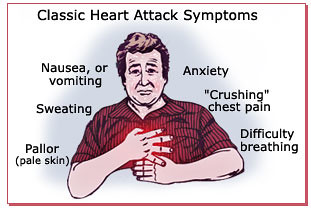
For a simple definition, the medical term "myocardial infarctions" means heart attack.
And again stated by our helpful website, the NHS (it's very useful, you know):
A heart attack is a serious medical emergency in which the
supply of blood to the heart is suddenly blocked, usually by a blood
clot. Lack of blood to the heart can seriously damage the heart muscle.
"Oh waiter, there seems to be a cryptosporidium bug in my water!"
"No problem sir, just boil it!"
Yes, more than 300,000 homes have been forced to resort to extreme measures - these houses in Lancashire now must boil their water, in the hope that it is finally safe to drink.
The bug, cryptosporidium was found in traces, and causes Cryptosporidiosis - a parasitic disease.
This disease prominently presents itself as diarrhoea for those who are immunocompromised
For all of those newcomers to my blog, I'd thought I'd do a little introduction!
Well, firstly, welcome to the blog!
We have a small 'schedule' where I make posts on particular days:
Mash-Up Monday: On Mondays I post a little anagram for different medical terms... Like; SHROOMEN and PLATSTEEL. Can you figure those out?
Wednesday Words: Also sometimes called "Words Wednesday" this is where I post a term of phrase related to medicine or science, with a neat little definition to expand your vocabulary.
Thinking Thursday: On these days I may post something for you to ponder about...
First-Aid Friday: Do you know your life-saving skills? On Fridays I try to post an informative picture or description assisting with your first aid.
Secret Sunday: Today, it's Sunday, which is when I post a picture that you have to work out...