Hi Readers!
Sorry I haven't posted in a long time, I've been so busy with revision!
Question to ponder:
How can an enzyme change the colour of your skin?
- Geeker
Saturday, 5 December 2015
Thursday, 22 October 2015
Thinking Thursday: Which is Which?
I thought I'd add a little Thursday surprise!
Can you work out the differences between each of these?
1. Chiropractor Vs Physiotherapist
2. Cardiac arrest Vs Myocardial infarction
3. Osmosis Vs Osmoregulation
- Geeker!
Tuesday, 20 October 2015
BrightMed Announcement
Attention all BrightMed Year 11 Students!
For any Year 11 students that missed Saturday's session - there's a very important task for this year. Get in touch for more details!
Posted by BrightMed at BSMS on Tuesday, 20 October 2015
Sunday, 18 October 2015
BrightMed: Session 1!
Time has gone quickly, as yesterday was another session back at BrightMed! And, I have to say, they never fail to interest!
This is definitely going to be a long post, so grab your tea or coffee, and get reading!
We began the session by scrutinising the differences between primary care and secondary care. We found various job roles for each, let's take a look at some here:
Primary care:
Here is what they suggested:
Introduction
So, apart from that, what can you check for on examination?
First you need to use the acronym "WIPER" - Wash, Introduce, Permission, Expose, Reposition
Next, you're ready to get hands on (which the patients consent, of course)!
Hands
-Any signs of clubbing?
-Xanthomas (these can signify high cholesterol/lipids)
-Nicotine stains
Arms
-Xanthomatus eruptions
-Pulse (radial) - you can also check for a delay between both wrists, too
-Blood pressure
Neck
-Pulse (carotid)
Face
-Pale conjunctivae
-Corneal arcus (common in the elderly, but in young people it can signify high cholesterol/lipids)
-Xanthalasma
-Nicotine stained teeth
-Cyanosis
Chest
-Pectus exavatum
-Pectus carinatum
-Scars
-Pacemaker
-Auscultation sites (aorta - base right, pulmonic - base left, mitral - apex, and tricuspid - left lateral stermal border)
Legs
-Peripheral oedema (fluid)
Ankle
-Pulse (posterior tibial artery)
Wow! That's a lot of examination!
Next, was Station 3 - Heart Sounds!
First, let's look at the parts of the heart that are involved:
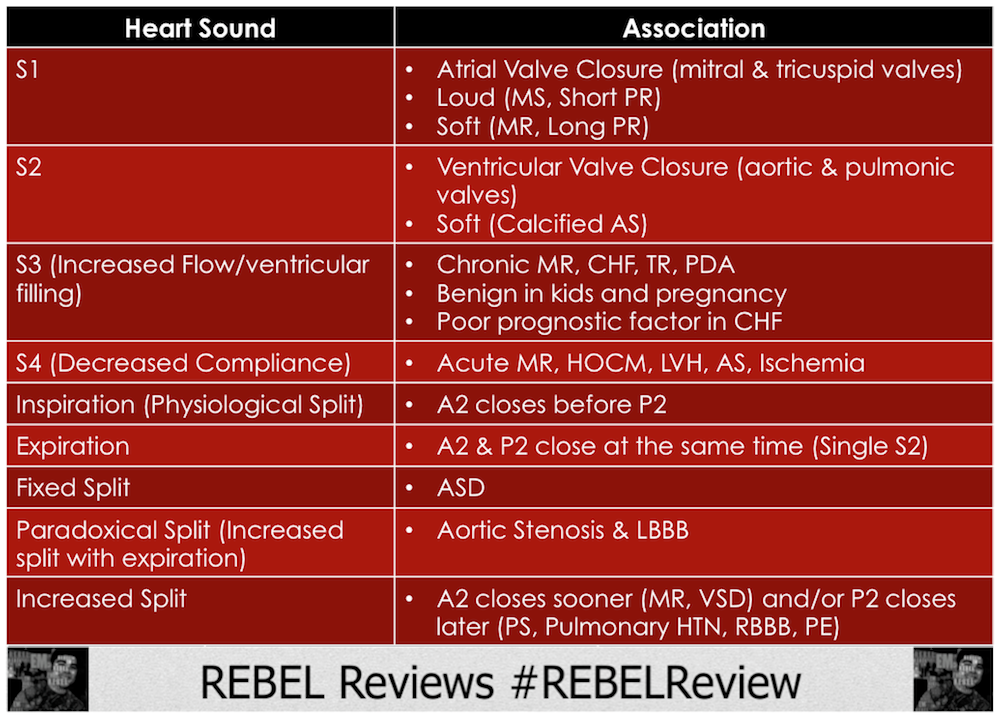
Next, we can take a look at the normal Vs abnormal sounds for a heart:
Curious to what these abnormal sounds can signify?
In simple terms:
Stenosis is a narrowing
Regurgitation is leaking
Here's part one of a very interesting video:
Finally, we looked at ECGs - Electrocardiogram
Which is the "recording of electroactivity of the heart using electrodes placed over the heart, wrists and ankles"
What can effect it?
Then, we look at the heart's electrical system:
Finally, here's a great video of ECG cardiac arrhythmias
What a day!
Don't forget to follow @BrightMed on Twitter!
Tweets by @BrightMed
- Geeker
This is definitely going to be a long post, so grab your tea or coffee, and get reading!
We began the session by scrutinising the differences between primary care and secondary care. We found various job roles for each, let's take a look at some here:
Primary care:
- General practitioner (GP)
- Family doctor
- Nurse practitioner
- Pharmacist
- Optician
- Dentist
- Hospital
- Dermatologists
- Urologists
- Cardiologists
- Specialised clinics
- Speech therapists
- Occupational therapists
- Cancer nurse
- Occupational therapist
- Radiologist
- Social worker
- GP
- Pathologist
- Oncologist
- Health care assistant
- Surgeon
- Physiotherapist
- Clinical biochemist
- Pharmacist
Here is what they suggested:
Introduction
- Introduce yourself
- Explain why you are there
- Ask for consent
- General information about the patient (Name, age, etc.)
- Briefly, why has the patient arrived today?
- Details about the presenting complaint
- Past experience of health problems
- List of medicatinos they take
- Allergies?
- Medical conditions/causes of death within the family
- Home life and hobbies
- Alcohol consumption and tobacco use
So, apart from that, what can you check for on examination?
First you need to use the acronym "WIPER" - Wash, Introduce, Permission, Expose, Reposition
Next, you're ready to get hands on (which the patients consent, of course)!
Hands
-Any signs of clubbing?
-Xanthomas (these can signify high cholesterol/lipids)
-Nicotine stains
Arms
-Xanthomatus eruptions
-Pulse (radial) - you can also check for a delay between both wrists, too
-Blood pressure
Neck
-Pulse (carotid)
Face
-Pale conjunctivae
-Corneal arcus (common in the elderly, but in young people it can signify high cholesterol/lipids)
-Xanthalasma
-Nicotine stained teeth
-Cyanosis
Chest
-Pectus exavatum
-Pectus carinatum
-Scars
-Pacemaker
-Auscultation sites (aorta - base right, pulmonic - base left, mitral - apex, and tricuspid - left lateral stermal border)
Legs
-Peripheral oedema (fluid)
Ankle
-Pulse (posterior tibial artery)
Wow! That's a lot of examination!
Next, was Station 3 - Heart Sounds!
First, let's look at the parts of the heart that are involved:
| Systolic Vs Diastolic. [Source: http://healthy-ojas.com] |
| [Source: Wikipedia] |
In simple terms:
Stenosis is a narrowing
Regurgitation is leaking
Here's part one of a very interesting video:
Finally, we looked at ECGs - Electrocardiogram
Which is the "recording of electroactivity of the heart using electrodes placed over the heart, wrists and ankles"
What can effect it?
- Heart rate monitoring
- Arrhythmias
- Disorders in the activation sequence
- Increased thickness
- Myocardial ischemia and infarction
- Drugs
Then, we look at the heart's electrical system:
Finally, here's a great video of ECG cardiac arrhythmias
What a day!
Don't forget to follow @BrightMed on Twitter!
Tweets by @BrightMed
- Geeker
Saturday, 26 September 2015
Dissections and Surveys!
Hi, everyone!
I did some cool lung and heart dissections recently!
Here's a pic:
But, besdies that, it would be absolutely great if you could take part in this survey - don't worry, it's absolutely anonymous.
https://www.surveymonkey.com/r/SW2MRML
Thanks in advance!
- Geeker
I did some cool lung and heart dissections recently!
Here's a pic:
But, besdies that, it would be absolutely great if you could take part in this survey - don't worry, it's absolutely anonymous.
https://www.surveymonkey.com/r/SW2MRML
Thanks in advance!
- Geeker
Wednesday, 16 September 2015
Sunday, 13 September 2015
What's coming?!
Secret Sunday, Mash-Up Monday, Wednesday Words and Last Week's Answers all coming Wednesday!
- Geeker
Friday, 11 September 2015
FAQ!
Here's our new FAQ!
That includes our "What's In My House?" - if you haven't read it, take a look!
Plus, here's a little "sneak peak" I posted ages ago...
http://haemobloggings.blogspot.co.uk/2015/08/whats-coming-next.html
Emergency medicine is so important, as is surgery, and I have a big interest for these. Whilst neurology, and cardiology I find so intruiging too. I like working with children, and the elderly. Plus, I even like radiology!
So many choices!
Hope you enjoyed reading our FAQ/Q&A
- Geeker
Q: Where have you been?
A: I've been doing some very important studying, thus, content wasn't very frequent. Sorry about that!Q: Have you returned?
A: I have indeed! Ready and waiting to post some good content!Q: What's coming next?
Q: Well, if you haven't seen my previous posts... we've got some other regular "series" running.That includes our "What's In My House?" - if you haven't read it, take a look!
Plus, here's a little "sneak peak" I posted ages ago...
http://haemobloggings.blogspot.co.uk/2015/08/whats-coming-next.html
Q: What branches in medicine and doctoring interest you?
A: That's a tricky one! There's so many I love!Emergency medicine is so important, as is surgery, and I have a big interest for these. Whilst neurology, and cardiology I find so intruiging too. I like working with children, and the elderly. Plus, I even like radiology!
So many choices!
Hope you enjoyed reading our FAQ/Q&A
- Geeker
First-Aid Friday: Emergency Tracheotomy
Perhaps not the traditional First-Aid Friday..
[Table courtesy to: http://www.tracheostomy.com/resources/surgery/emergency.htm]
- Geeker
[Table courtesy to: http://www.tracheostomy.com/resources/surgery/emergency.htm]
| Find the indentation between the Adam's apple and the Cricoid cartilage. | |
| Make a half-inch horizontal incision about one half inch deep. | |
| Pinch the incision or insert your finger inside the slit to open it. | |
| Insert your tube into the incision, roughly one-half to one inch deep. |
- Geeker
Subscribe to:
Posts (Atom)