Showing posts with label BrightMed. Show all posts

Saturday, 22 April 2017

BrightMed Out and About: London!

London!

The Hunterian Museum!


Wonderful drawing of myself made by Pedro Moreira. (http://galonth2000.deviantart.com/)

Note: if you'd like to learn any more information about the key objects given, then check out the link under their photo! 

 I was greeted by this beautiful display of the disected human body's veins on a wooden board, as soon as I entered the exhibit. This one of four boards was prepared by Giovanni Leoni d'Este in 1645-1646. Now owned by the British Museum, the board was described to contain: "Dried human tissue adhering to a flat wooden board made of planed pine planks butted and glued together. The board and tissue have been treated with several layers of varnish made from animal and plant materials."

Further information: http://surgicat.rcseng.ac.uk/Details/collect/10204

 Next on my list of top sights to see,  was the 7"7 skeleton of Charles Byrne (1761-1783). Mr Byrne suffered from gigantism caused by a pituitary tumour, and hence was named "The Irish Giant".

An extract from SurgiCat says that:

It is now known that Byrne’s skeleton shows evidence of pituitary giantism, in which excessive growth is accompanied by a delay in the onset of puberty. Pituitary giantism is caused by over-production of growth hormone from the pituitary gland in the base of the skull. Growth after puberty leads to acromegaly, in which bones become thicker rather than longer. In 1891 the physiologist Daniel Cunningham (1850-1909) suggested Byrne suffered from acromegaly. In 1909 the American neurologist Harvey Cushing (1869-1939) persuaded Arthur Keith to examine the inside of Byrne’s skull. As Cushing had expected, Keith found that the pituitary fossa (the cavity in which the pituitary gland sits) was enlarged, proving the existence of a tumour
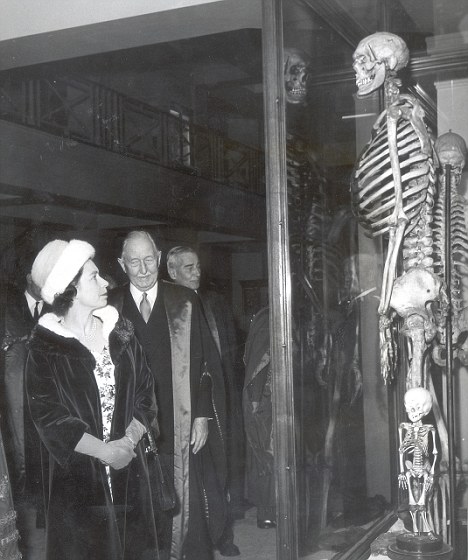
 
The Queen viewing the skeleton

 There has been a lot of controversy however, as the museum was told to obey Mr Byrne's dying wish; to be buried at sea. Read more about this here: http://www.dailymail.co.uk/news/article-2077392/London-museum-told-stop-displaying-skeleton-Charles-Byrne.html


Next to this statue lies the next artefact I wish to bring your attention to: a 39 year old man named Mr Jeffs who suffered from a rare disease of the connective tissue called "fibrodysplasia ossificans progressiva". 

According to the U.S. National Library of Medicine:

"Fibrodysplasia ossificans progressiva (FOP) is a disorder in which muscle tissue and connective tissue such as tendons and ligaments are gradually replaced by bone (ossified), forming bone outside the skeleton (extra-skeletal or heterotopic bone) that constrains movement."
Further information: http://surgicat.rcseng.ac.uk/Details/collect/5495
The next object was a salivary adenoma that was removed from Mr John Burley's neck, at age 37, by John Hunter. The tumour itself weighed over 4kg and took 25 minutes to remove. Impressive!


Further information: http://surgicat.rcseng.ac.uk/Details/collect/4838


After this, I was introduced to the "LifePort" Kidney Transporter where it carries the organ at cold temperatures, of +4°C. Organ-recovery.com describes the LifePort as:

"The LifePort Kidney Transporter provides a sealed, sterile environment where a specially formulated physiologic solution is gently pumped through the kidney at cold temperatures to minimize tissue damage while the organ is being preserved outside the body. LifePort Kidney Transporter is lightweight and portable allowing an organ to be perfused from time of recovery until transplantation. It is designed to travel unaccompanied by land or air, safely transporting the kidney across town or between countries. While the kidney is being perfused, LifePort Kidney Transporter records data on temperature, flow rate, vascular resistance and pressure every 10 seconds, offering clinicians important additional data."


I was particularly fascinated by the next display, which showed A-ke, a Chinese man who had a parasitic twin in the thoracic region. This model commissioned by John Livingstone from memory has been under dispute, as it's note entirely accurate. Livingstone even wrote that "‘it represents the roundness of infancy [which] has disappeared from the original’.".

 
Further information: http://surgicat.rcseng.ac.uk/Details/collect/43177

 Next, a neurosurgical instrument used to carry out trepanation - drilling into the skull. Apparently used like a pair of compasses, the instrument displayed is damaged.

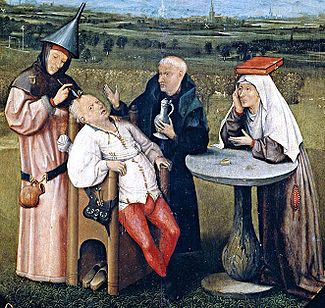
Detail from The Extraction of the Stone of Madness, a painting by Hieronymus Bosch depicting trepanation (c.1488–1516).

The next jar shows a part of the spleen's surface which had calcified tissue, which was "likely to have resulted from chronic inflammation of the adjacent peritoneum due to tuberculous peritonitis". 

Peritonitis is a widespread abdominal infection. 

Further information: http://surgicat.rcseng.ac.uk/Details/collect/4302
 I also learnt a few terms:

Enterorrhaphy  - the suturing of sections of bowel together
Anastomosis - the connection of two vessels
Intussusception - where the bowel folds back on itself

As an example, here is a photo of a dog which suffered from a intussusception of the ilieum. 

Further information: http://surgicat.rcseng.ac.uk/Details/collect/4268
  Of course, there were so many more amazing and interesting artefacts, but these were some that I noted down! 

The Wellcome Museum

We begin at Medicine Now!


First on my collection of photos, is "Palindrome" by Willian Cobbing. The Wellcome Collection describes it:

"Palindrome was inspired by a section in J G Ballard's 'The Atrocity Exhibition', in which a character imagines that "the bones of the pelvis may constitute the remains of a lost sacral skull". How does it make you feel?"

I loved their "Transparent Woman" which allowed you to push a button, which would light up the selected body part! I wouldn't mind having that as a feature in my home!


How about John Isaac's sculpture named "I Can't Help the Way I feel" bring to light our body perception, and how someone might view themself.

Source: https://wellcomecollection.org/selection-objects-0/?image=1
 I just have to include the body slice which is a plastinated body specimen, which was vacuumed to be replaced with plastics. It's absolutely beautiful.


Our bodies are made of 70% water

Source: https://wellcomecollection.org/selection-objects-0/?image=3
This collection is absolutely insane! The Genome project, translated into hundreds of volumes is right here in the Wellcome collection!


 I also went to see the Medicine Man collection!

Just check out this: Charles Darwin's walking stick!


 And that's the end of my journey!

There's so many more sights to see, you need to check it out!

- Geeker

Friday, 21 April 2017

BrightMed Session 3: Mental Health and Global Health

It's great to be back! Now I can update you on my BrightMed adventures!

This one is session 3 of this year; so we're going back a long time! I've got one more session to write about after this, and then our day trip out!

In the morning, our focus was on three mental health areas:
  • Depression
  • Anorexia Nervosa
  • Schizophrenia

First, let's take a look at the WHO's definition of mental health.

"Mental health is defined as a state of well-being in which every individual realizes his or her own potential, can cope with the normal stresses of life, can work productively and fruitfully, and is able to make a contribution to her or his community"

What do you think about this?

Some things to consider:

  • How can one realise their own potential? What about viewing "beyond" your potential?
  • What can we classify as "normal stresses of life"? What does this entail, and would it not differ for others?
  • How do we quantify or simply productivity?
  • If one doesn't make a contribution to community, do they not have a good state of mind?
Definitely food for thought!

The Thinker by Auguste Rodin


Some facts:

  • 1 in 4 adults experience mental health problems every year
  • Approximately 450 million people worldwide have a mental health problem
  • 30% of GP consultations are for mental health
Previously, physicians used to separate the symptoms into two categories:

Neuroses → Depression, anxiety, etc
Psychoses → Hallucinations, delusions, etc

However, this is not generally used now. Now they use "DSM-V or ICD-10"

As a note, the word "Schizotypal" was brought up", which means that it doesn't necessarily indicate schizophrenia, (even though it displays similar characteristics), as it doesn't meet the full criteria.

Interesting point for further research; we came across a man named "Bryan Charnley" who documented the effects of schizophrenia as artwork.

Self-portrait by Bryan Charnley
Food for thought: perhaps exploring his artwork is a way of becoming more empathetic and understanding of mental health both for careers within medicine and in general life!

After this, we took a brief look at the "Global Burden of Disease Report", which according to the WHO:

"measures burden of disease using the disability-adjusted-life-year (DALY). This time-based measure combines years of life lost due to premature mortality and years of life lost due to time lived in states of less than full health."
 Here were the leading few conditions within Disability Adjusted Life Years:

  • Lower respiratory infections
  • Diarrhoeal conditions
  • Unipolar depressive disorders
 I'd like to look at this DALY further, as well as a general overview of the Global Burden of Disease report - so that's being added to my to-do list!

Next, we were told about Schizophrenia in more detail.


Here's some of the information I have compiled:

  • The main presenting symptoms can be:
    • Hallucinations
    • Ideas of conspiracies - delusions 
    • Withdrawn behaviour, nervousness, flattening of mood
    • Delusion of passivity - as defined by biology-online.org: a delusion in which one experiences one's feelings, impulses, thoughts, or actions as not one's own, but as being imposed on by some external force
  • There is a genetic predisposition
    • Folie à deux - a shared psychosis
  •  1% of the population in the UK
  • The typical ages for being affected are:
    • Male: 20-28
    • Female: 26-32
  • Males are more affect than females
  • It's believed to have an African origin in inner city London
  • It is more likely to occur if there was a problem during childbirth 

 We then looked at Depression


On discussing the main symptoms, we found that they were:

  • Anhedonia - recieving no pleasure from hobbies
  • Lack of energy
  • Sadness
  • Loss of libido
The risk factors are:
  •  Stress
  • Trauma
  • Family history
It occurs at a ratio of men to women at 1:2.

Treatment can be:
  • Cognitive Behavioural Therapy (CBT)
  • Anti-depressants (We can look at these in more detail in the future)
    • SSRI (Selective serotonin reuptake inhibitor)
    • SNRI (Serotonin–norepinephrine reuptake inhibitor)
    • TCA (Tricyclic antidepressants)
    • MAOI (Monoamine oxidase inhibitors)
  • E.C.T (Electro-compulsive therapy) 
You have to assess the "capacity" of patients when treating. This involves: understanding, retaining information, weighing up the pros and cons, and communicating.

http://cdn.hercampus.com/s3fs-public/1468445687-depression.jpg

Our next topic was Anorexia.


You can recognise anorexia by behaviour like:
  •  Not wanting to eat
  • Feeling full
  • Feeling paranoid with calories
  • Having a bad body image
  • Scared of food consequences 
It is more diagnosed in women - potentially due to "social image".

The most important point in my opinion is that due to underfunding, people can be refused treatment because their BMI isn't low enough, which is absolutely terrible. Not only would this bring on an even further lack of body confidence, but also, we must remember that weight is not the only area affected by eating disorders.

In fact, anorexia is the psychiatric disorder with the highest death rate.

Our afternoon session was based all around Global Health

 This can be expanded to the:

  • Biomedical sciences
  • Public health
  • Social sciences
  • Environmental sciences
 We had a little look at health inequalities, refugee health, gender equity, and climate change. Again, I could do a little write up on this topic further in the future!

 Stay tuned for my next post, with information about my London Day Trip!
Geeker

Monday, 2 January 2017

BrightMed Session 1 and 2: Year 12 Begins!

Hi everyone,

On the 15th October and the 3rd December I had session one and two of Year 12 BrightMed! So, here are my write ups!

15th October


 Cancer

 
www.celldiagram.net


To start, did you know that 1 in 3 people get Cancer? That's 33% of all people at some point in their life, and it all starts with the mutation of one cell...

On a more positive note, 50% of people survive cancer (to live 10 years or more).

We can classify it using the "Six Hallmarks of Cancer"

  1. Autonomy from growth signals - generally we know that cells require messages to start growth. But for cancer cells, this isn't seen as they use "Autocrine signalling".
  2. Evasion of inhibitory signals - the tumour suppressor genes do not work on these cancer cells (to note, proto-oncogenes are also now activated, which help regulate cell growth)
  3. Evasion of programmed cell death (apoptosis) - Apoptosis cannot activate in cancer cells
  4. Unlimited replication - immortal cells
  5. Blood vessel formation - they receive a continuous supply of nutrients
  6. Invasion and spread - they metastasize 

 This means that multiple mutations accumulate over time. Usually this leads to cell death, but somehow they manage to survive.

Now that we've covered the basic ideas of cancer, my next task was to cover a particular treatment for cancer. Mine was Hormonal therapy, and I used breast cancer as an example.

Hormonal Therapy


Hormonal therapy is not hormone replacement. It is the giving of synthetic drugs to block the body's natural hormones. For instance, on breast cells, you can either lower the oestrogen or block the action. However, hormonal therapy is not effective against things like hormone-receptor-negative breast cancers - hence the name.

Examples for breast cancers are
  • Aromatase inhibitors - aromatase is an enzyme that synthesises oestrogen
  • Selective oestrogen receptor modulators - these are gents which bind to oestrogen receptors
  • Oestrogen receptor down regulators - these block the effects 
As an alternative, some people may choose to have their ovaries and fallopian tubes removed, or shutdown temporarily.

Some of the side effects of breast cancer hormonal therapy are:
  • Hot flashes
  • Fatigue
  • Mood swings
  • Vaginal dryness and discharge
  • Weight gain
  • Headaches
  • Depression and mood swings


 3rd December

 Introduction to Ethics


What is ethics?
 
Ethics is a branch of philosophy which involves the study of right and wrong.

An important note is that ethics involves consistence - you can't have a principal and only apply it to certain things, it must be ubiquitous!

We all have a sense of personal morality. It helps us decide between right and wrong, where we consider the pros and cons, and think about both our own, and our social moral principals.

What types of ethical theories are there?

 Consequentialist - utilitarianism
Non-Consequentialist - Deontology, contractarianism

Utilitarianism 

Jeremy Bentham transformed ethics from pleasing God to pragmatic concerns. His principle:

The act to produce optimal amount of happiness.
 Benefits:
  • Egalitarianism
  • Intuitive - makes sense to want to please everyone
  • Easy to follow
  • Flexible - Different contexts require different responses
Social Contract Theory

"Social contract theory, nearly as old as philosophy itself, is the view that persons' moral and/or political obligations are dependent upon a contract or agreement among them to form the society in which they live." - www.iep.utm.edu/soc-cont/

Thomas Hobbes - Leviathan:

 In regards to morality "... In order to live together optimally"
He said that life without social contract - a world without morality: "The life of man, solarity, poor, nasty brutish and short"

Our facts of human existence:

  1. We have quality of need
  2. Resources are scarce
  3. We have equality of facilities
  4. Altruism is limited
People must abide by social contract - this builds trust with no life of fear and self interest.

With civil disobedience, the social contact can change.

Weaknesses:
  • Hypothetical structures
  • Entirely implicit
  • We sign up because of fear: cost-benefit analysis
Another thing to consider: do we have duties towards: babies, non human animals, oppressed people, the planet and our descendants? 

Deontology
The categorical imperative - devised by Emanuel Kant

To clarify, an example of a cateogrical imperitive is "you ought not to kill" whilst a hypothetical imperative is "if you want... then...". This creates a universal law.

However, the problems with it are as followed:
  • It's wrong to lie
  • It's wrong to be complicit in the killing of innocent people
  • It's too idealistic
Health Ethics
 
Now to put this in regards of medicine, it's incredibly important for doctors to be aware and put into practice the four principles of medicine:

  1. Autonomy -  the patients' needs (decision making)
  2. Beneficence - Doing good (the Hippocratic oath)
  3. Non maleficence - Do no harm
  4. Justice - Considering treating equally 


What do you think on everything discussed today? Let us know, I'd love to hear what you think!

- Geeker

I'm Back: Let's Turn Over a New Leaf!

Wow, it's been a long time since I've posted in a while!

I've been really busy with classwork and of course all my other hobbies! One of them includes using my microscope... Recently I've been switching from looking at prepared slides, to doing a lot of at-home experiments myself. Including making a print of a leaf!

Here's one of the slides I prepared earlier:


 I love the fact that you can see the stomata and the guard cells!

Anyway, stay tuned today, as I'll be posting an update about my BrightMed!

And of course, Happy 2017!

- Geeker

Friday, 11 March 2016

BrightMed Session 3: Are you tensing for angiotensin?

Well it definitely was a while ago that BrightMed Session 3 occurred, but I've been so busy that I only now have the time to write about it!

This time's session was about the creation of our own drug, and I've been really looking forward to this time for a long time.

I'm pretty proud to say our drug was named "Renogen" (guess who came up with the great name)

As the tweet above describes, Renogen is a synthetic angiotensin replacement

But what does that mean?

Let's begin by describing perfusion:

This is the process of supplying all of the vital organs with enough blood to carry nutrients and oxygen, and remove waste products.

Or you can take a definition from Mr. Wikipedia:

In physiology, perfusion is the process of a body delivering blood to a capillary bed in its biological tissue. The word is derived from the French verb "perfuser" meaning to "pour over or through."
Now we've established that, let's talk about hypertension.

Hypertension is described as blood pressure that is greater than 140/90, and can cause things such as stroke, myocardial infarctions, or even retinopathy.

So, how do we actually get blood pressure? Well, we times the flow with the resistance, of course!

Blood pressure = cardiac output x the peripheral resistance.

Another thing to note: stroke volume x heart rate, gives your cardiac output!

Now we can look at cardiac output!


  1. The sympathetic nervous system
  2. Releases noradrenalin
  3. Bind to β receptors in heart
  4. Increased heart rate and stroke volume
The opposite?

  1. The parasympathetic nervous system
  2. Releases acetylcholine
  3. Binds to M receptors in heart

 Now for a very important fact: the more calcium there is, the more contractions we have.

So, in your heart

Na (Sodium) > β receptors > Ca2+ (Calcium) channel opens > Increased Ca2+ > Increased contractions

ACh (acetylcholine) > M receptors > Ca2+ (Calcium) channel closes> Decreased Ca2+ > Decreased contractions

And in your vessels:

Sympathetic Nervous System > NA > A1 Receptors > Ca2+ (Calcium) channel opens  > Increased contractions

Don't worry, there's no reverse of this for the vessels, as they can simply "relax"

So, we can now look at the Renin Angiotensin Aldosterone System... but not just yet... there's more information coming soon!

Well, we can
- Geeker

Sunday, 10 January 2016

BrightMed Session 2: Are you making these terrible errors in your personal statement? Struggle with interviews?

Just had my first BrightMed session of 2016!

In light of the grand round we began the session with, do you know what Lansoprazole is, and is used for?

Image credit: Wikipedia source
 To give you a hint, it's a "Proton-Pump inhibitor" - which I'll explain with the answers!

Next, we took a look at a selection of personal statements: deciding whether or not to give the candidate an interview.

Here's our notes:


Are you making careless mistakes on your personal statement?

There's some more information here: https://www.oxford-royale.co.uk/articles/analysis-personal-statement.html

After that, we focused on interviews!

One of my best tips is to record yourself when practicing with a friend, or someone you know - it can help you to reflect back on what went well, and what to improve in the future!

Things you shouldn't do in an interview?

  • Use small filler words like "Um", "Er" or "Like"
  • Give short, simple sentences
  • Use inappropriate language 
  • Yes/No answers
  • Giving lists
  • Looking downwards at your lap, feet, or hands
  • Habits
Image credit: Cornonthejob
 Don't forget to go and like and follow BrightMed BSMS on Facebook and Twitter!


- Geeker

Tuesday, 20 October 2015

BrightMed Announcement

 Attention all BrightMed Year 11 Students!
 

For any Year 11 students that missed Saturday's session - there's a very important task for this year. Get in touch for more details!
Posted by BrightMed at BSMS on Tuesday, 20 October 2015
- Geeker

Sunday, 18 October 2015

BrightMed: Session 1!

 Time has gone quickly, as yesterday was another session back at BrightMed! And, I have to say, they never fail to interest!

This is definitely going to be a long post, so grab your tea or coffee, and get reading!

We began the session by scrutinising the differences between primary care and secondary care. We found various job roles for each, let's take a look at some here:

Primary care:
  • General practitioner (GP)
  • Family doctor
  • Nurse practitioner
  • Pharmacist
  • Optician
  • Dentist

Secondary care:
  •  Hospital
    • Dermatologists
    • Urologists
    • Cardiologists
  • Specialised clinics
  • Speech therapists
  • Occupational therapists 

Next, we looked at a multidisciplinary team. One example was poor Mrs Beaton, who was diagnosed with breast cancer. Here are some people who could be at a multidisciplinary team to discuss her treatment:

  • Cancer nurse
  • Occupational therapist
  • Radiologist
  • Social worker
  • GP
  • Pathologist
  • Oncologist
  • Health care assistant
  • Surgeon
  • Physiotherapist
  • Clinical biochemist
  • Pharmacist 

 After this, we discussed how to take a person's history. Do you know the steps?

Here is what they suggested:

Introduction
  • Introduce yourself
  • Explain why you are there
  • Ask for consent
Patient demographics
  • General information about the patient (Name, age, etc.)
Presenting complaint
  • Briefly, why has the patient arrived today? 
History of presenting complaint

  • Details about the presenting complaint
Past medical history
  • Past experience of health problems
 Drug history
  • List of medicatinos they take
  • Allergies?
Family history
  • Medical conditions/causes of death within the family
Social history
  • Home life and hobbies
  • Alcohol consumption and tobacco use
 And then, you're done taking the history!

So, apart from that, what can you check for on examination?

First you need to use the acronym "WIPER" - Wash, Introduce, Permission, Expose, Reposition

Next, you're ready to get hands on (which the patients consent, of course)!

Hands
-Any signs of clubbing?
-Xanthomas (these can signify high cholesterol/lipids)
-Nicotine stains

Arms
-Xanthomatus eruptions
-Pulse (radial) - you can also check for a delay between both wrists, too
-Blood pressure

Neck
-Pulse (carotid)

Face
-Pale conjunctivae
-Corneal arcus (common in the elderly, but in young people it can signify high cholesterol/lipids)
-Xanthalasma
-Nicotine stained teeth
-Cyanosis

Chest
-Pectus exavatum
-Pectus carinatum
-Scars
-Pacemaker
-Auscultation sites (aorta - base right, pulmonic - base left, mitral - apex, and tricuspid - left lateral stermal border)

Legs
-Peripheral oedema (fluid)

Ankle
-Pulse (posterior tibial artery)

Wow! That's a lot of examination!

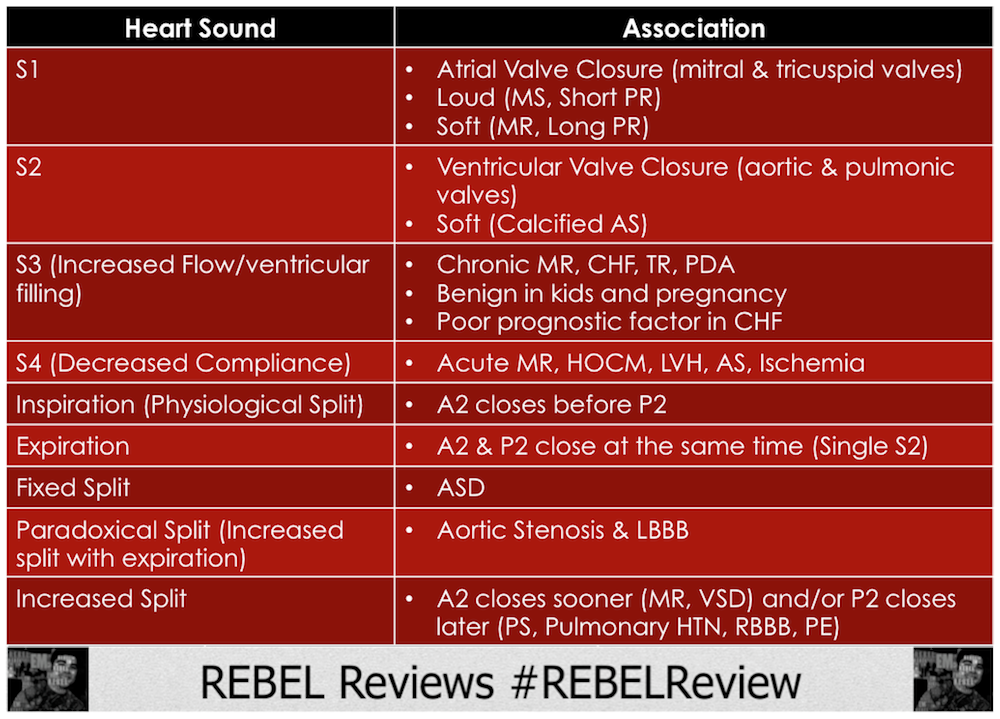
Next, was Station 3 - Heart Sounds!

First, let's look at the parts of the heart that are involved:

Systolic Vs Diastolic. [Source: http://healthy-ojas.com]
Next, we can take a look at the normal Vs abnormal sounds for a heart:

[Source: Wikipedia]

Curious to what these abnormal sounds can signify?


In simple terms:

Stenosis is a narrowing
Regurgitation is leaking

Here's part one of a very interesting video:


Finally, we looked at ECGs - Electrocardiogram

Which is the "recording of electroactivity of the heart using electrodes placed over the heart, wrists and ankles"

What can effect it?

  • Heart rate monitoring
  • Arrhythmias
  • Disorders in the activation sequence
  • Increased thickness
  • Myocardial ischemia and infarction
  • Drugs 
We monitor them through a series of waves:

Then, we look at the heart's electrical system:

Finally, here's a great video of ECG cardiac arrhythmias


What a day!

Don't forget to follow @BrightMed on Twitter!

 
- Geeker

Sunday, 14 December 2014

BrightMed 3: The Year Finale!

 Well guys, hasn't it been a busy week!

I haven't posted much recently, but I suppose I'll try and make it up to you today. I went to BrightMed yesterday for the last time this year, and like always, I have much to tell you.

You see, a very good point was made while I was there. We don't just go to BrightMed to develop our mind with medicine and anatomy. Or to even push ourselves as potential doctors. Of course, these are very major factors, and yet there is one other reason that seems particularly important. It's not just about grades and knowledge when you become a doctor, it's also about care, commitment and communication. Not just any odd "Hello, I'm Doctor [fill in with awesome sounding surname], what can I do for you today?", it's also about non-verbal communication, actually caring for your patients and making them feel as reassured as possible.

Which leads me onto what we did whilst I was there. Most of the day consisted on one of my favourite activities they offer at BrightMed; taking some one's history. The funny thing is (yes, I have a bizarre sense of humour), was that it was awesome to see your techniques develop throughout the day. You would begin the day answering small, open questions that only offered quick answers. But, by the end of the day we really saw how you can effectively communicate with your patients - and of course work on our teamwork skills.

They ended the day with us presenting our findings to the rest of the class. Our presentation was on gall-stone related illnesses.

However, this wasn't the end of the day for me. I decided to help out one of the medical students with her project she is performing. So, I participated in a interview with six other students where we discussed our learning techniques. Needless to say, it was a really eye opener as it was great to be with others who had the same mind set on education and the need to learn.

What can I say? Another great session.

And I haven't even had dinner...

- Geeker

Sunday, 2 November 2014

BrightMed 2: I found this humerus...

 Busy day yesterday!

Well, where do I begin? I met up with some interesting people in the morning,  where we went in pairs and retrieved a clean t-shirt. We then began to follow some instructions towards where each area of the body is. Ribs, lungs, kidneys, etc. And then drew them on a t-shirt.

Sadly though, mine didn't look quite like this:


 But, I'm sure it was close enough. Just kidding, we didn't do the muscles! :)

Then, we entered the computer lab and researched a particular organ of our choice. Ours being the large intestine. Following this, we had to right out simple instructions so that others can draw the large intestine without looking at a picture.

Now, have you ever had to write instructions for where the large intestine is, what angle it is at, and where its ascending colon is found?

Well, have a go:

It was great, I now know exactly where it is positioned, and where it lies according to other organs.

After this, we left the lab and shared our findings with another pair. There's being the adrenal glands. I have to say, I felt sorry for them when they had to work through a one and a half page of large intestine instructions. There's was awesome, it really helps with your individual learning.

Lastly we teamed up in a group of six, and were given a career to research. We were given oncology and took on a particular area of the job. I researched a typical day in the life, and their training requirements. This task itself was particuarly fascinating, as we then had to watch, and present our findings to the rest of the students. This was a key highlight; it made us consider career paths we hadn't looked at in medicine, and adapted our confidence skills when presenting. I'd love to do more of this!

Sadly, it was the end of the day for BrightMed. But, not for my work - I set off onto cadet duty and returned thoroughly satisfied with the overall day I have had.

Here's a interesting video on the digestive system:


Or, here's the link: https://www.youtube.com/watch?v=4waSJqOEJts

Plus, checkout this cool website!: http://www.zygotebody.com/

Now, here's a small joke...


- Geeker

Saturday, 11 October 2014

BrightMed 1: The Story Begins...

Off to a great start, and ended with a fantastic finish; BrightMed has just begun!

And the 'long' journey was definitely worth the wait. (Apart from the roundabouts - no one likes roundabouts...)

You know that moment when you're sitting in a lecture hall, waiting for the time to go by? Nope, can't say I do, not today at least!

Really, it was absolutely amazing. I think the most admirable part, was the fact that we were all treated as adults, as respected human beings, as potential doctors.

 So, how about I tell you what we did? I don't know why I bothered asking, I'm going to tell you anyway.


  1. Anatomy Session - Everyone knows how crucial anatomy is for becoming a doctor, but no-one really knows how entertaining it is. Seriously, if a student ever says they dislike it, they don't. They're either lying, or in the wrong theatre...
  2. S B E E T A I D - Here's another thing we learnt about... Can you work out what it is?
  3. Being taught by students - This was awesome, UTIs, heart circulation and kidneys - All in one session! Plus, a free insight into the students high quality of teaching.
  4. Now we're on the subject of heart circulation... - I have to admit, previously I thought that a practical walk around a virtual Circulation of the Heart wouldn't be beneficial. How wrong I was. Not only was it incredibly educational, it's also fascinating to see how systematic and precise the circulatory system is!
  5. Possibly the highlight of my day: taking medical history - Not only did we get to see an Oscar winning performance, but we were able to experience some amazing clinical application of the skills we learnt. Mr Beaton, do you know your SOCRATES?
Mum's response: "So you liked it then?"

For now, here's a video for those of you who wish to learn more about Atherosclerosis...


- Geeker

Friday, 10 October 2014

Saturday, 20 September 2014

Stephen Christmas


"Factor IX was discovered in 1952 in a young patient with hemophilia B named Stephen Christmas (1947–1993)" - Wikipedia

- Geeker

Welcome


After experiencing my first exhilarating meeting with all the BrightMed participants, it has certainly been an event to remember. Trolleyology was absolutely amazing, learning about the coagulation cascade was extremely intriguing - the whole meeting overall was an absolute delight. 


I've got to say, it's hard to appreciate how awesome it is to see all the enthusiastic children in the lecture theatre. Just today, my mum even said how envious she is of this educating course - she will even start learning some more too! 


I mean, what can I say about the highlights? It was all so brilliant!

 It's very educational
  • It develops my passion
  • It even has it's own Twitter page  (clearly the most outstanding highlight)
Everything is just so exciting!  

However, I'd like to take my time to thank all the staff that are in association with BrightMed. And, of course to welcome everyone to my blog! It will be a wonderful experience, and I can't wait to return.
 

Readers,

Have an interest in medicine?
Love science, technology, mathematics or languages?
Part of the BrightMed experience?
A total geek?

Read my blog, because you will (hopefully) enjoy it


(Not that I want you to read my blog, that's totally irrelevant)

Honestly, I hope you will enjoy the future posts - I know I enjoy writing them! 


- Geeker