Friday, 11 March 2016

BrightMed Session 3: Are you tensing for angiotensin?

Well it definitely was a while ago that BrightMed Session 3 occurred, but I've been so busy that I only now have the time to write about it!

This time's session was about the creation of our own drug, and I've been really looking forward to this time for a long time.

I'm pretty proud to say our drug was named "Renogen" (guess who came up with the great name)

As the tweet above describes, Renogen is a synthetic angiotensin replacement

But what does that mean?

Let's begin by describing perfusion:

This is the process of supplying all of the vital organs with enough blood to carry nutrients and oxygen, and remove waste products.

Or you can take a definition from Mr. Wikipedia:

In physiology, perfusion is the process of a body delivering blood to a capillary bed in its biological tissue. The word is derived from the French verb "perfuser" meaning to "pour over or through."
Now we've established that, let's talk about hypertension.

Hypertension is described as blood pressure that is greater than 140/90, and can cause things such as stroke, myocardial infarctions, or even retinopathy.

So, how do we actually get blood pressure? Well, we times the flow with the resistance, of course!

Blood pressure = cardiac output x the peripheral resistance.

Another thing to note: stroke volume x heart rate, gives your cardiac output!

Now we can look at cardiac output!


  1. The sympathetic nervous system
  2. Releases noradrenalin
  3. Bind to β receptors in heart
  4. Increased heart rate and stroke volume
The opposite?

  1. The parasympathetic nervous system
  2. Releases acetylcholine
  3. Binds to M receptors in heart

 Now for a very important fact: the more calcium there is, the more contractions we have.

So, in your heart

Na (Sodium) > β receptors > Ca2+ (Calcium) channel opens > Increased Ca2+ > Increased contractions

ACh (acetylcholine) > M receptors > Ca2+ (Calcium) channel closes> Decreased Ca2+ > Decreased contractions

And in your vessels:

Sympathetic Nervous System > NA > A1 Receptors > Ca2+ (Calcium) channel opens  > Increased contractions

Don't worry, there's no reverse of this for the vessels, as they can simply "relax"

So, we can now look at the Renin Angiotensin Aldosterone System... but not just yet... there's more information coming soon!

Well, we can
- Geeker

Sunday, 7 February 2016

Secret Sunday: Iced Gems?

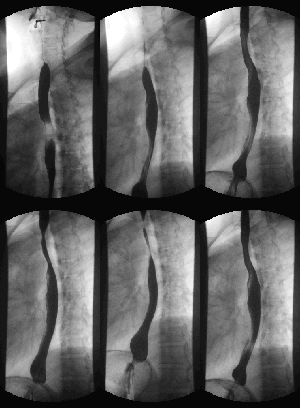
What could this be?

Source: Daily Medicine

 *Hint: They're not iced gems*

- Geeker

Tuesday, 2 February 2016

MyGCSE: Yummy Digestion!

Hi Readers!

It's been suggested to me through the survey (http://haemobloggings.blogspot.co.uk/2016/01/survey.html), that I should provide some content to help with exams for GCSE students!

So today's new post is on GCSE Biology for the Edexcel Exam Board (which has been the most requested).

 First up, is the Digestive System:


Food is moved down the digestive system by peristalsis - the squeezing motion of food being pushed down the gut by the muscles.


Mouth

  •  The teeth chew food into a bolus for an increased surface area for the enzymes
  • Saliva moistens
  • Salivary enzymes chemically digest
  • Salivary amylase breaks down starch to glucose
Oesophagus

  •  Muscular tube which contracts in waves
  • Squeezes food to the stomach by peristalsis (but you already know what that is, smarty pants)
Stomach
  •  Muscular bag with Hydrochloric acid and enzymes
  • Proteins are digested (the acid provides optimum pH for enzymes)
  • Microbes are destroyed
Pancreas
  •  Makes digestive enzymes and releases them into the small intestine
Liver
  • Produces bile
Gall bladder
  • Stores biles
  • Salts to emulsify fats to again, increase the surface area
  • Neutralises stomach acids 
Small intestine
  •  Contains lots of digestive enzymes
  • Most of the large insoluble food molecules are broken down to soluble molecules which are absorbed by the blood through the villi
Large Intestine
  •  Undigested food
  • Water and minerals are absorbed into the blood
  • Main function: push faeces to rectum
  • Faeces are then egested from the anus
Rectum
  •  Where faeces is stored
Anus
  •  Egests faeces

More next time about enzymes and the villi!


But for now, here's some more information about the digestive system (just don't peak at next week's :D) http://www.bbc.co.uk/schools/gcsebitesize/science/add_edexcel/common_systems/digestionrev1.shtml

- Geeker

Monday, 1 February 2016

Mash-Up Monday: Topical!

Here's some topical words for today!


D I E N K Y

N E R A L


H E N R O P N


L U D L E M A D

And here's a hint:


- Geeker

Sunday, 31 January 2016

Saturday, 30 January 2016

Last Week's Information!

As promised, here's our information from last week's answers!

 Urinary Incontinence

Urinary incontinence affects a lot of people. If we take a look at some statistics by www.bladder-control.co.uk, we can see that an overactive bladder is more predominant in older generations:


 Here are some of the top facts provided by their website, sourced from other places:

1. Studies suggest that in the UK "major faecal incontinence" affects 1.4% of the general population over 40 years old and constipation affects between 3% and 15% of the population.5

2. In the UK, 24% of older people are affected by urinary incontinence. Of those older people in institutional care, 30-60% are affected by urinary incontinence, and 25% by bowel incontinence.7

3. Women are more likely to suffer from stress urinary incontinence than men. That's because of the effects of childbirth and the menopause. Men, on the other hand, are more likely to have urinary retention. That's because many men develop prostate gland enlargement as they age. Women don't have a prostate gland.

Sources:
5. Perry, S. et al. Prevalence of faecal incontinence in adults aged 40 years or more living in the community. Gut 2002; 50: 480-484. http://gut.bmj.com/cgi/content/full/50/4/480. (Abstract available. Article accessed 17.01.2006)
7. Hunskaar, S., Lose, et al. (2003) Prevalence of Stress Urinary Incontinence in Women in Four European Countries, 2002. ICS: UK. Link to PDF: http://www.icsoffice.org/publications/2002/pdf/257.pdf (Accessed 28.11.2006)

But what is urinary incontinence?

According to the NHS:

Urinary incontinence is the unintentional passing of urine. It is a common problem and is thought to affect millions of people worldwide.

If you're struggling with incontinence, there's a very helpful website here, that will provide with crucial information that you need to know: http://www.nhs.uk/Livewell/incontinence/Pages/Gettinghelp.aspx

 Myocardial Infarction

For a simple definition, the medical term "myocardial infarctions" means heart attack.

And again stated by our helpful website, the NHS (it's very useful, you know):

A heart attack is a serious medical emergency in which the supply of blood to the heart is suddenly blocked, usually by a blood clot. Lack of blood to the heart can seriously damage the heart muscle.

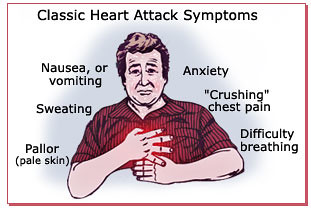
Here's some symptoms that might be present:

Source: http://www.ba-bamail.com/content.aspx?emailid=18627


And some more...
Source: Heart attack wisdom on Pinterest

So, how to "treat" it?

Here's a great, informative video!


I hope that covers a lot!

Any more questions, just ask!
 
- Geeker


Sunday, 17 January 2016

Last Week's Answers 21!

 Mash-Up Monday: Incontinence

Wednesday Words and First-Aid Friday: Myocardial Infarction

More information about them coming soon!


- Geeker

Friday, 15 January 2016

Wednesday Words and First-Aid Friday: Combo!

It's a two in one!

So, here's the First-Aid Friday's photo


 Can you remember the medical term for his problem?

- Geeker

Sunday, 10 January 2016

Last Week's Answers 20!

 Are you ready for this week's answers?


(Well, tough, you're getting them anyway)

Secret Sunday: A Hearty Game!

Image credit: sciencekids.co.nz


 Mash-Up Monday!

The theme:

The skin!

Words:

  • Dermis
  • Follicles
  • Keratin
Random word:

  • Appendix

Wednesday Words: The Cochlea!


According to Wikipedia:

The cochlea (plural is cochleae) is a spiraled, hollow, conical chamber of bone, in which waves propagate from the base (near the middle ear and the oval window) to the apex (the top or center of the spiral). Rosenthal's canal or the spiral canal of the cochlea is a section of the bony labyrinth of the inner ear that is approximately 30 mm long and makes 2¾ turns about the modiolus.

- Geeker